The Done List: Three Lines a Night, Including the Invisible Work
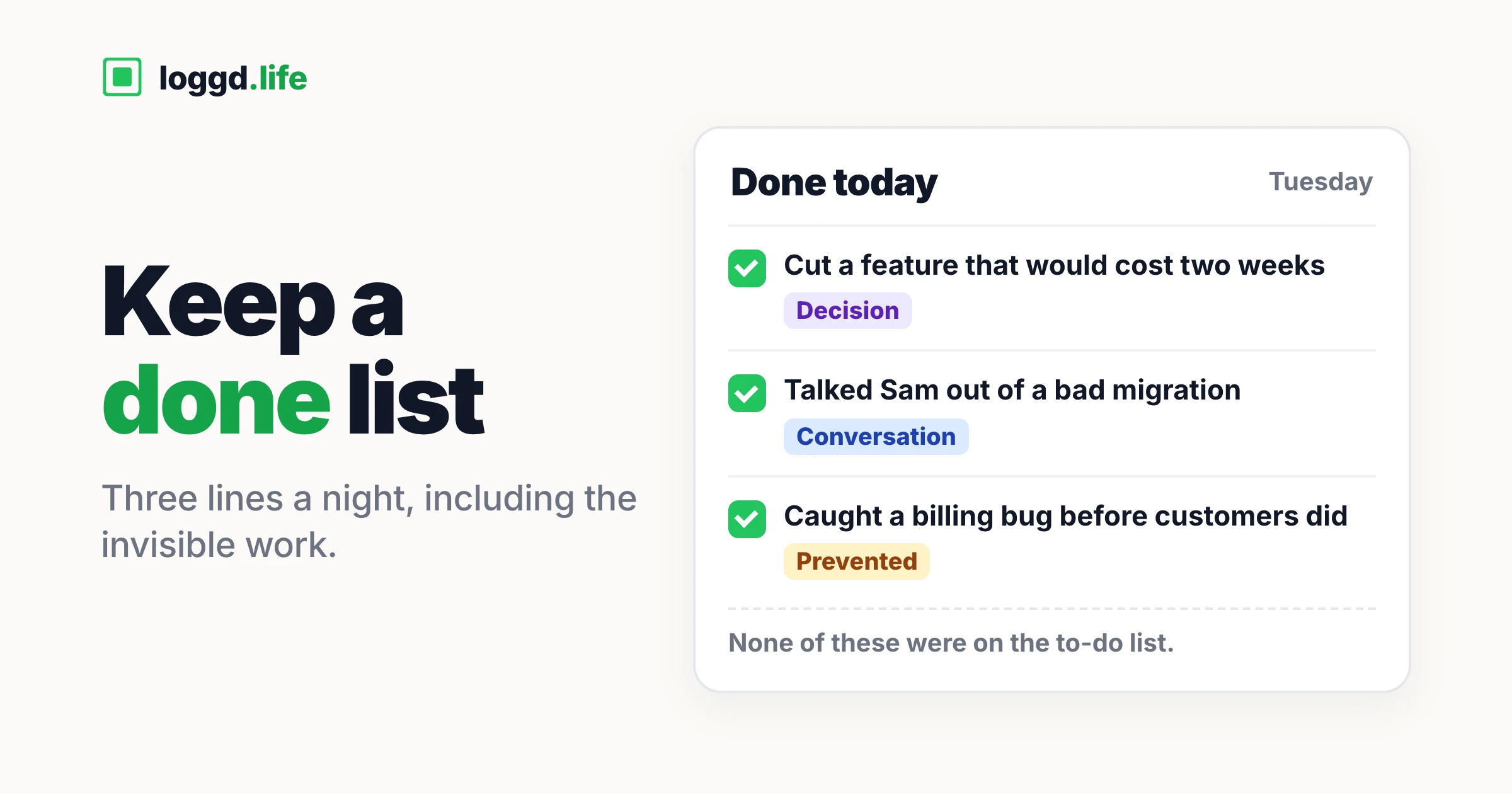
A to-do list is a permanent record of what you have not done. A done list is the same day, inverted. Here is how to run one in three lines a night.
Practical guides, app tips, and ideas on habits and productivity.
A to-do list is a permanent record of what you have not done. A done list is the same day, inverted. Here is how to run one in three lines a night.
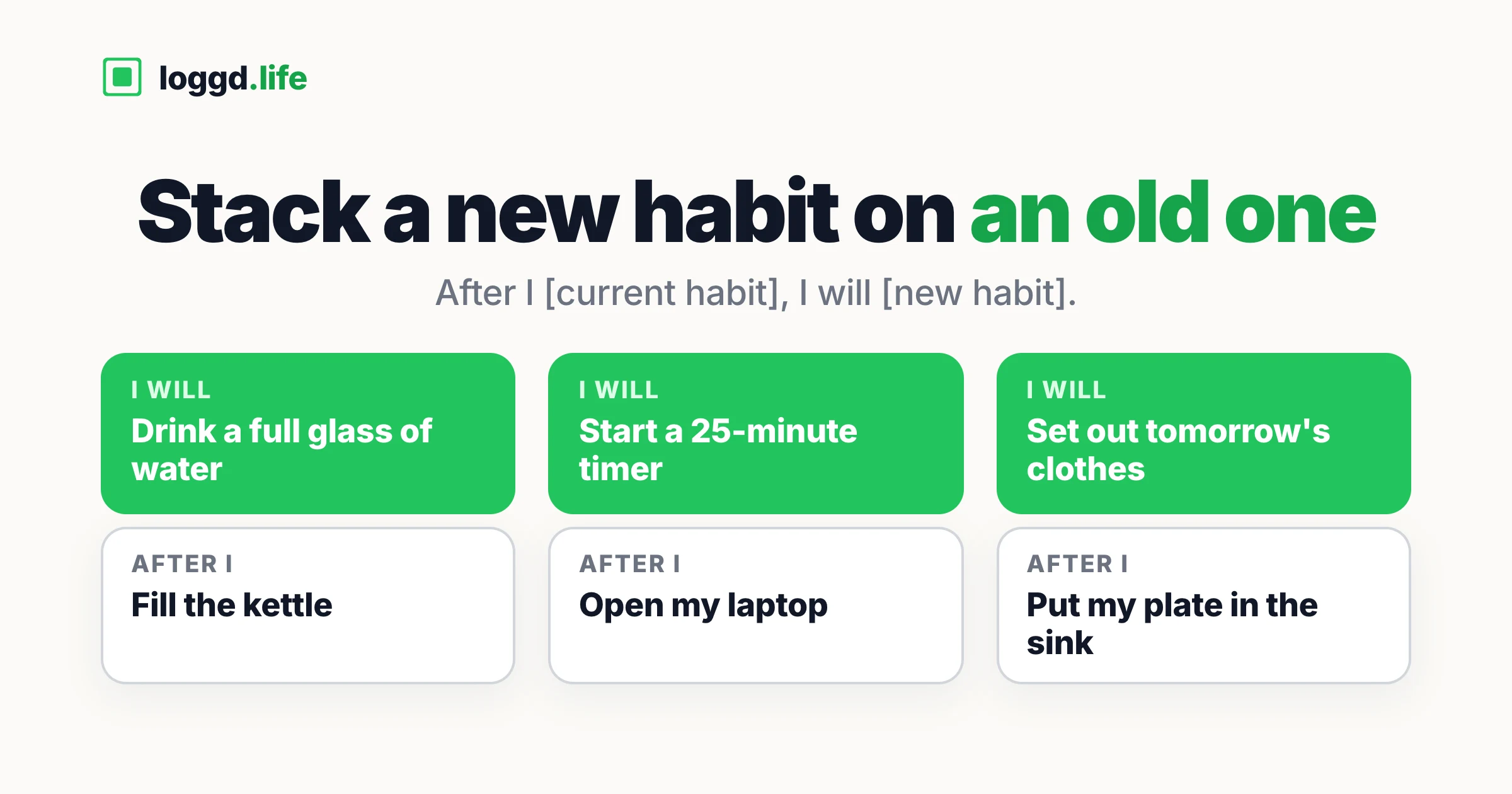
The formula is one sentence. Choosing the anchor is the whole skill. Thirty concrete habit stacks for mornings, work, evenings, parents and remote days, plus why stacks break.
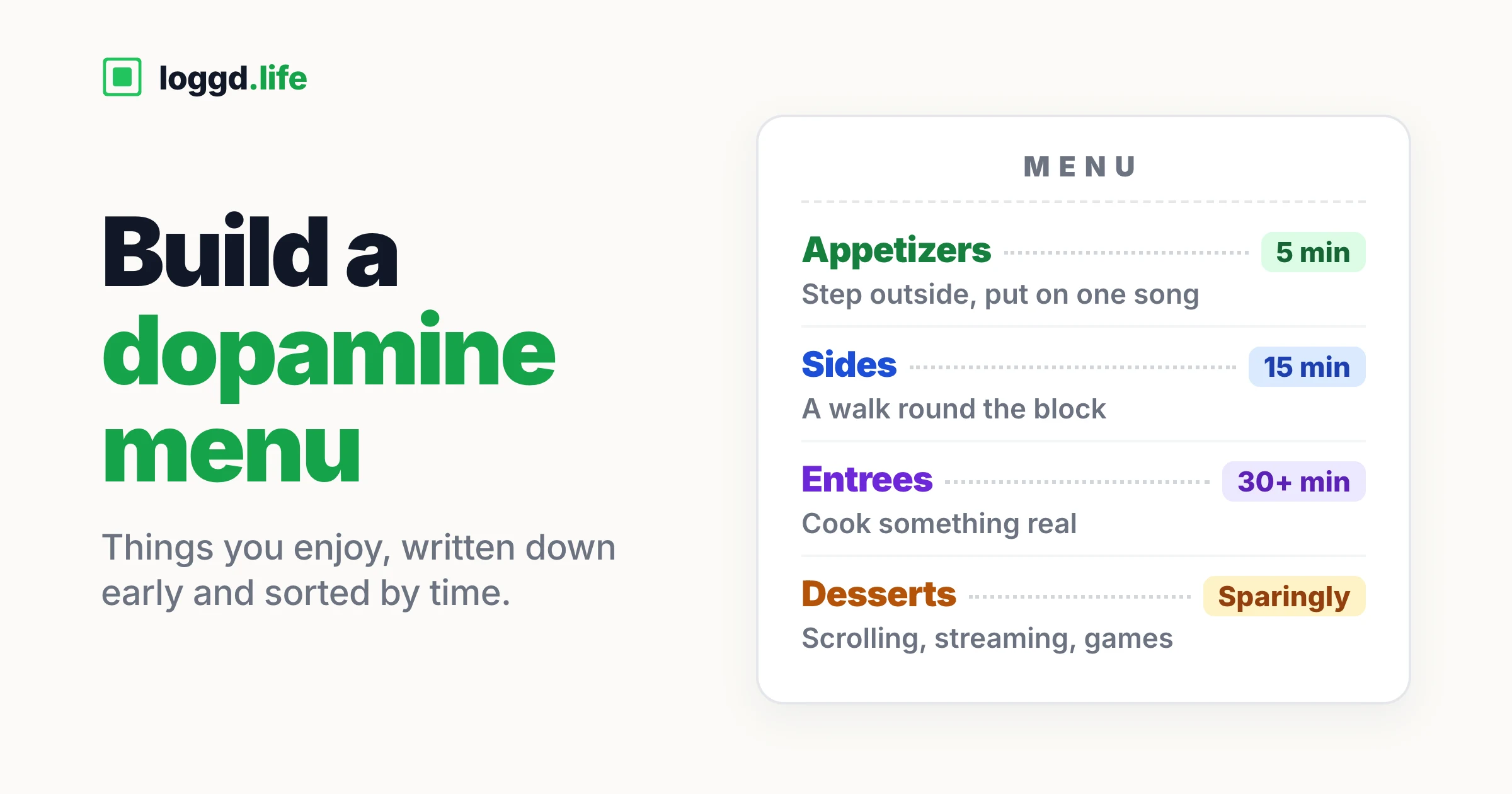
A dopamine menu is a pre-written list of rewarding things to do, sorted by how long they take. Here is how to build one, and an honest note about what the name actually means.
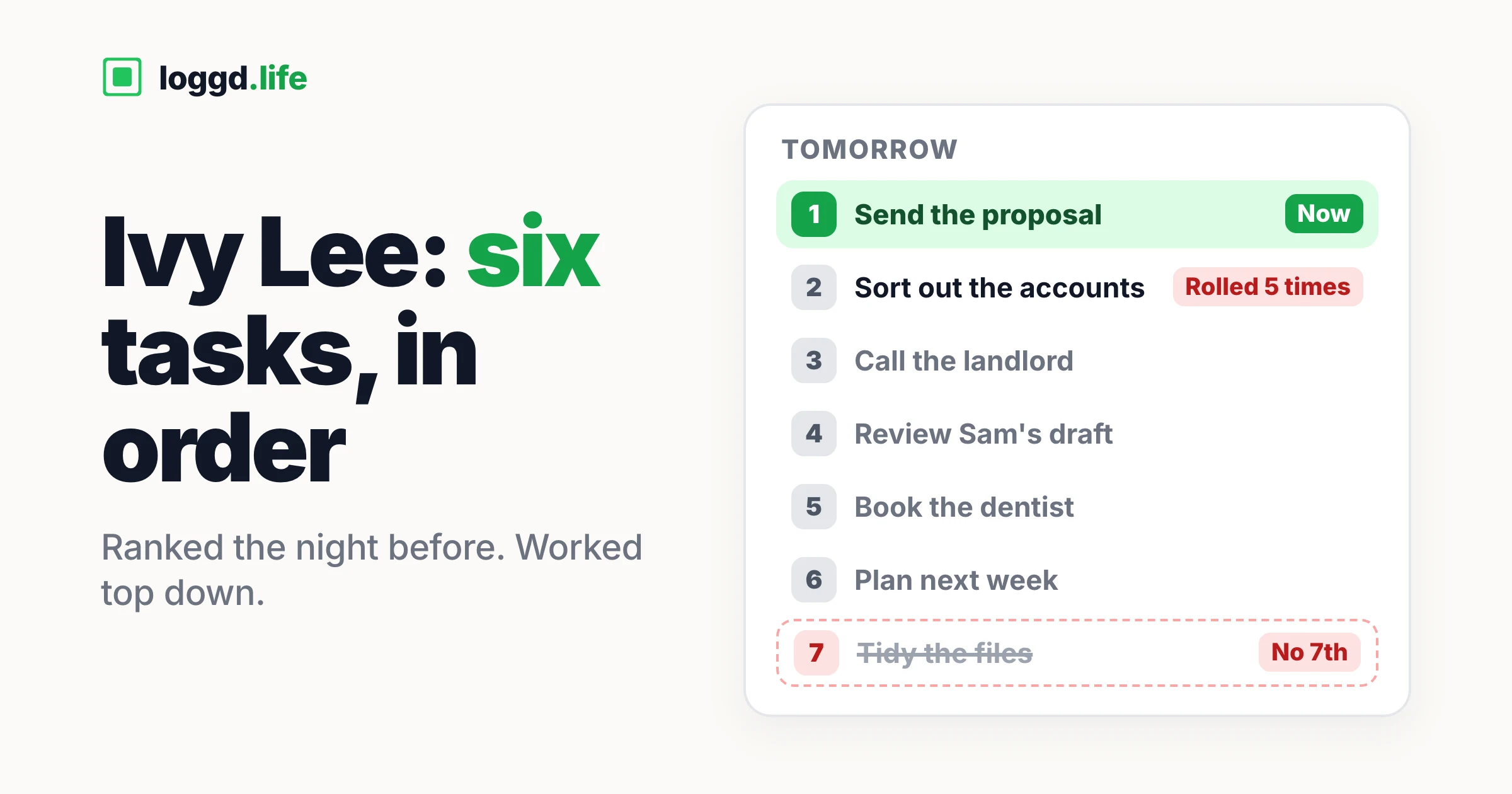
The 1918 story is folklore, but the routine survives on mechanics: six tasks, ranked the night before, worked strictly top down. Here is what the cap does, what the order does, and when six is too many.
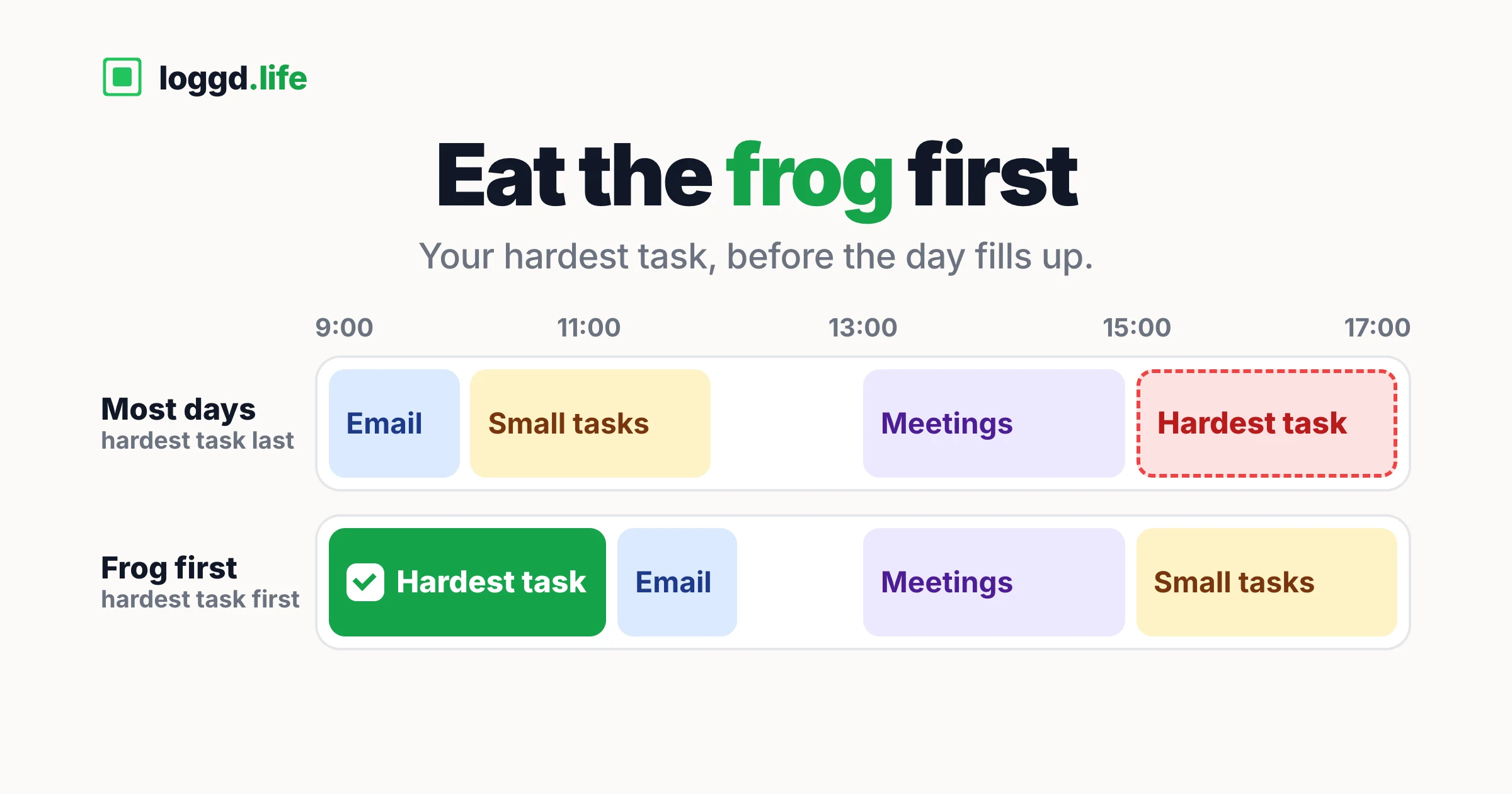
The disputed Twain quote, what Brian Tracy actually built on it, how to pick the right frog, and the two situations where doing the hardest task first is the wrong advice.
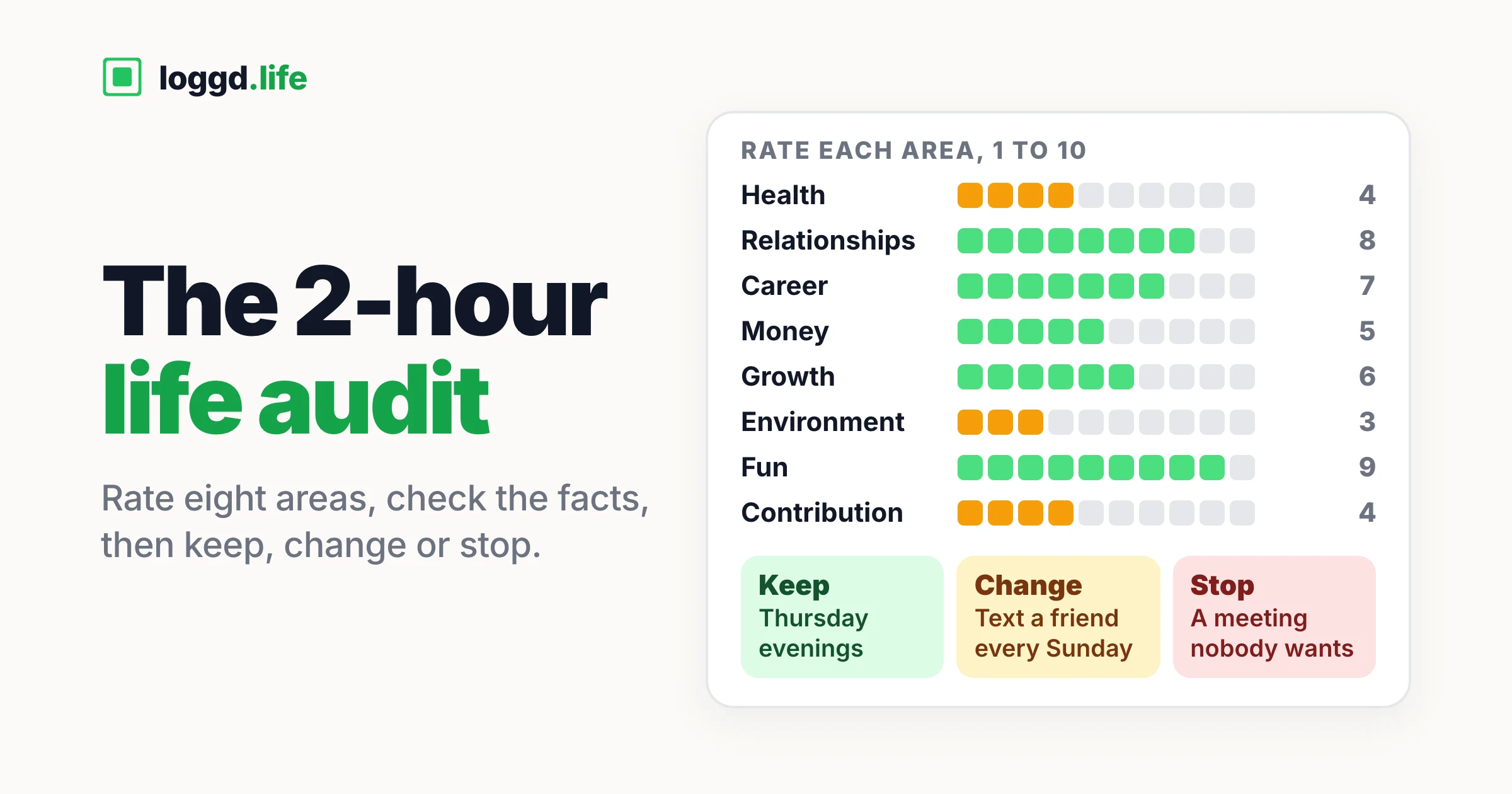
A life audit is an honest inventory, not a satisfaction rating. Here is the two-hour version: fact-check where the hours went, then give every finding a keep, change, or stop verdict.
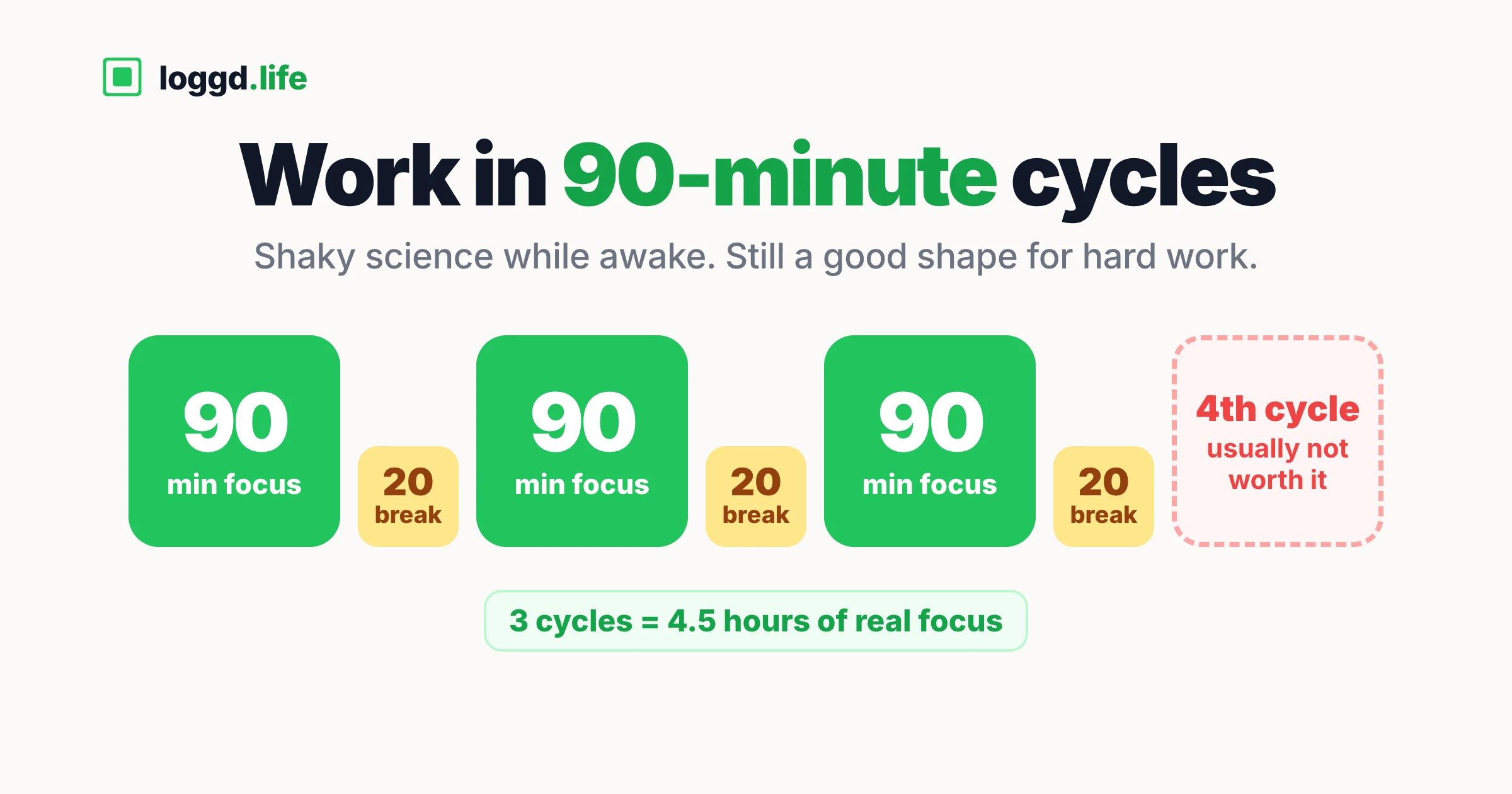
The 90-minute cycle is solid sleep science and much shakier once you are awake. Here is the honest status, and why the 90/20 template is still worth running.
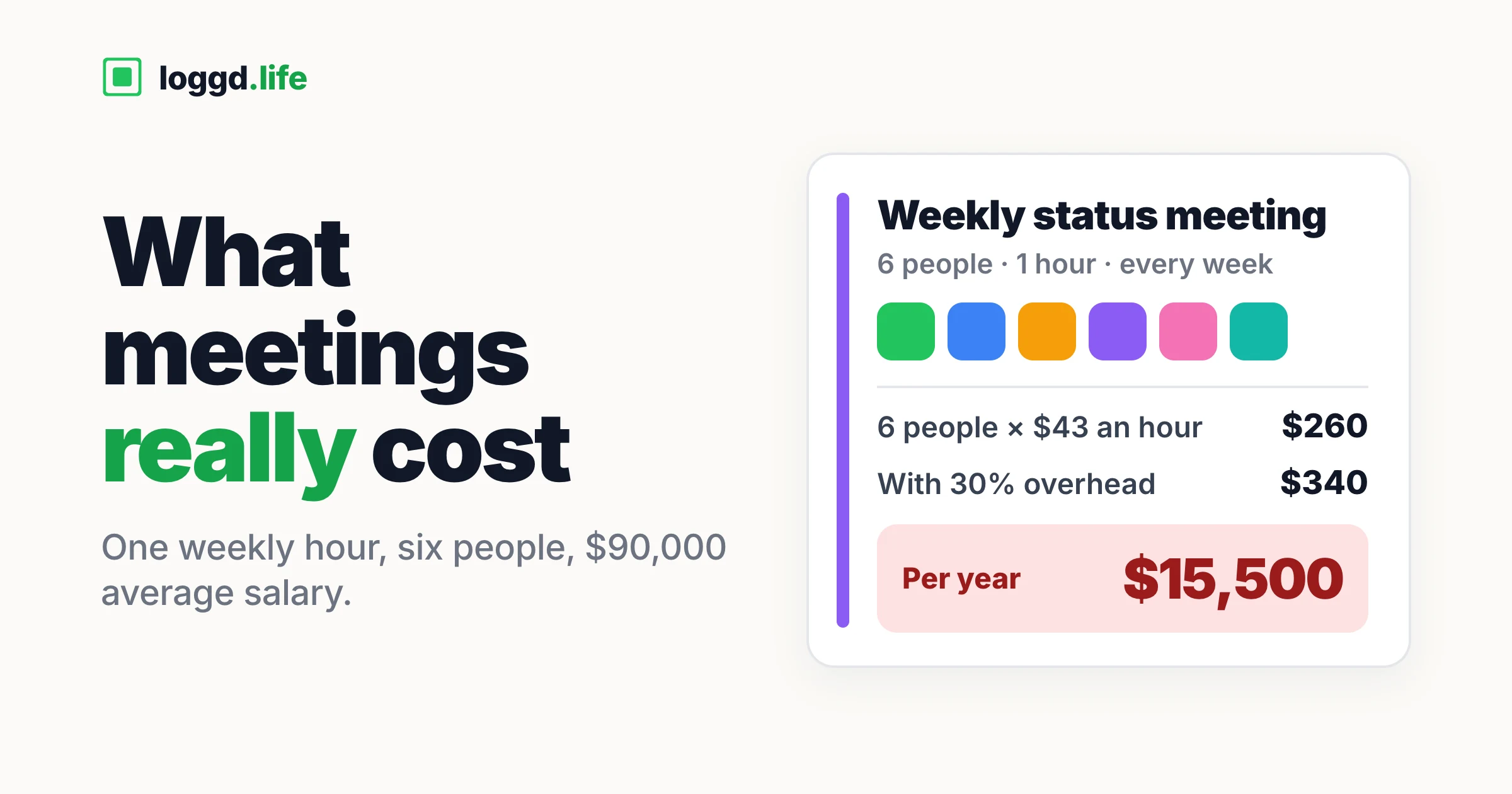
The salary maths is the easy half. The real cost of a meeting is the fragmented hour on either side of it. Here is how to price yours and decline the rest.
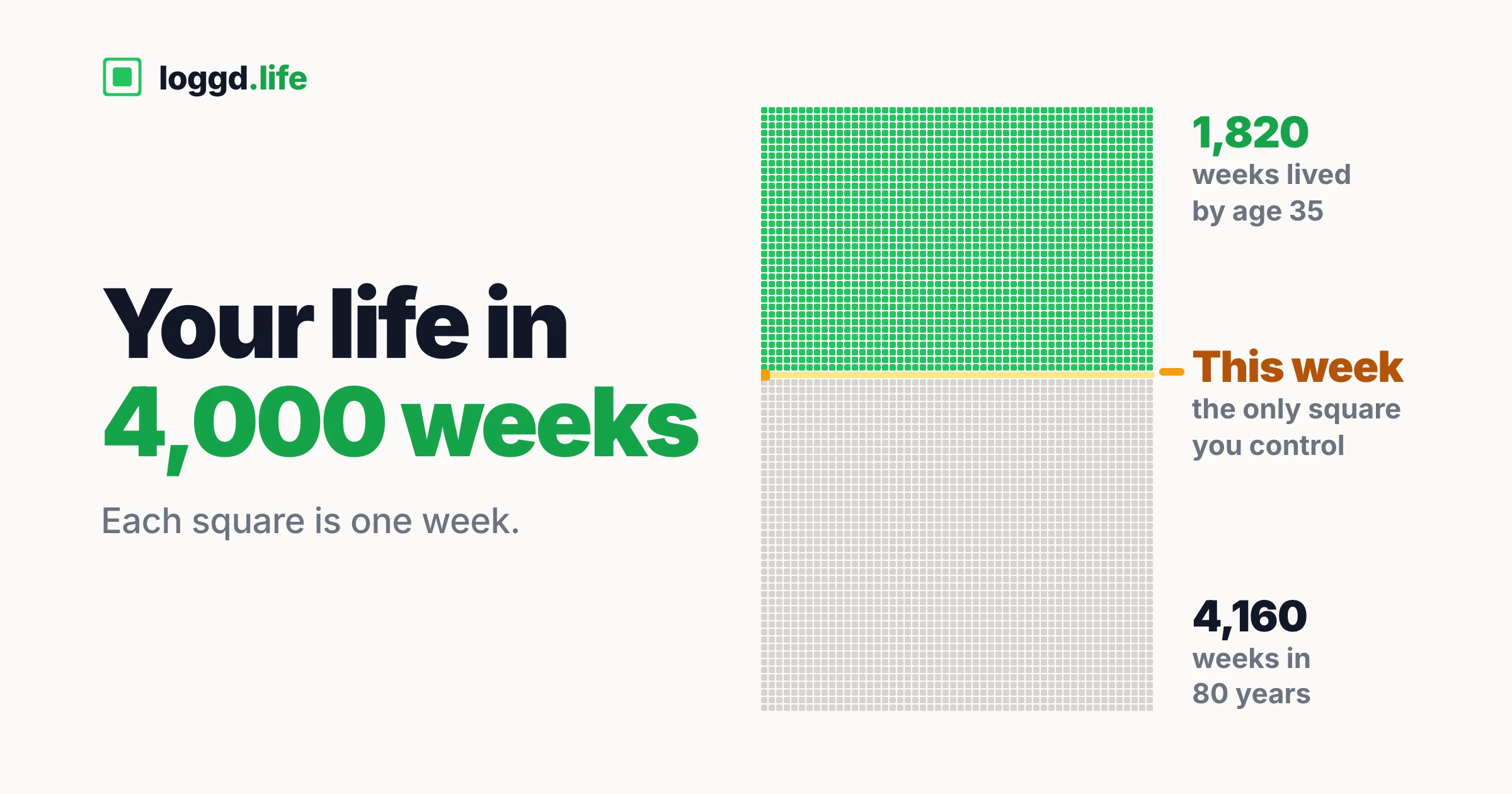
A long life is roughly 4,000 weeks. Why the grid lands harder than the number, what Oliver Burkeman actually argued, and when this exercise does more harm than good.
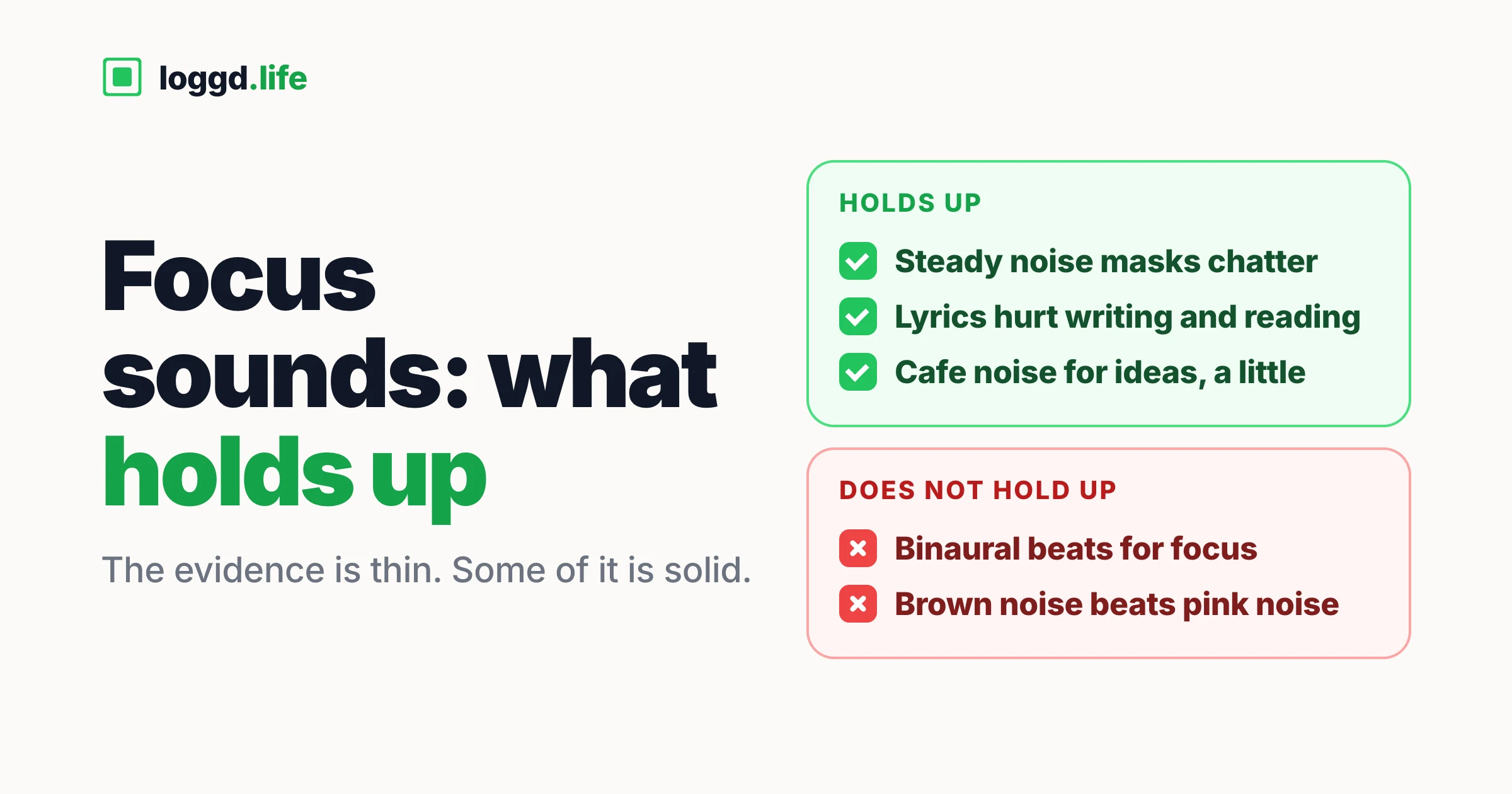
The research on background sound is messier and weaker than the internet suggests. Here is what holds up, what does not, and how to match sound to the task.
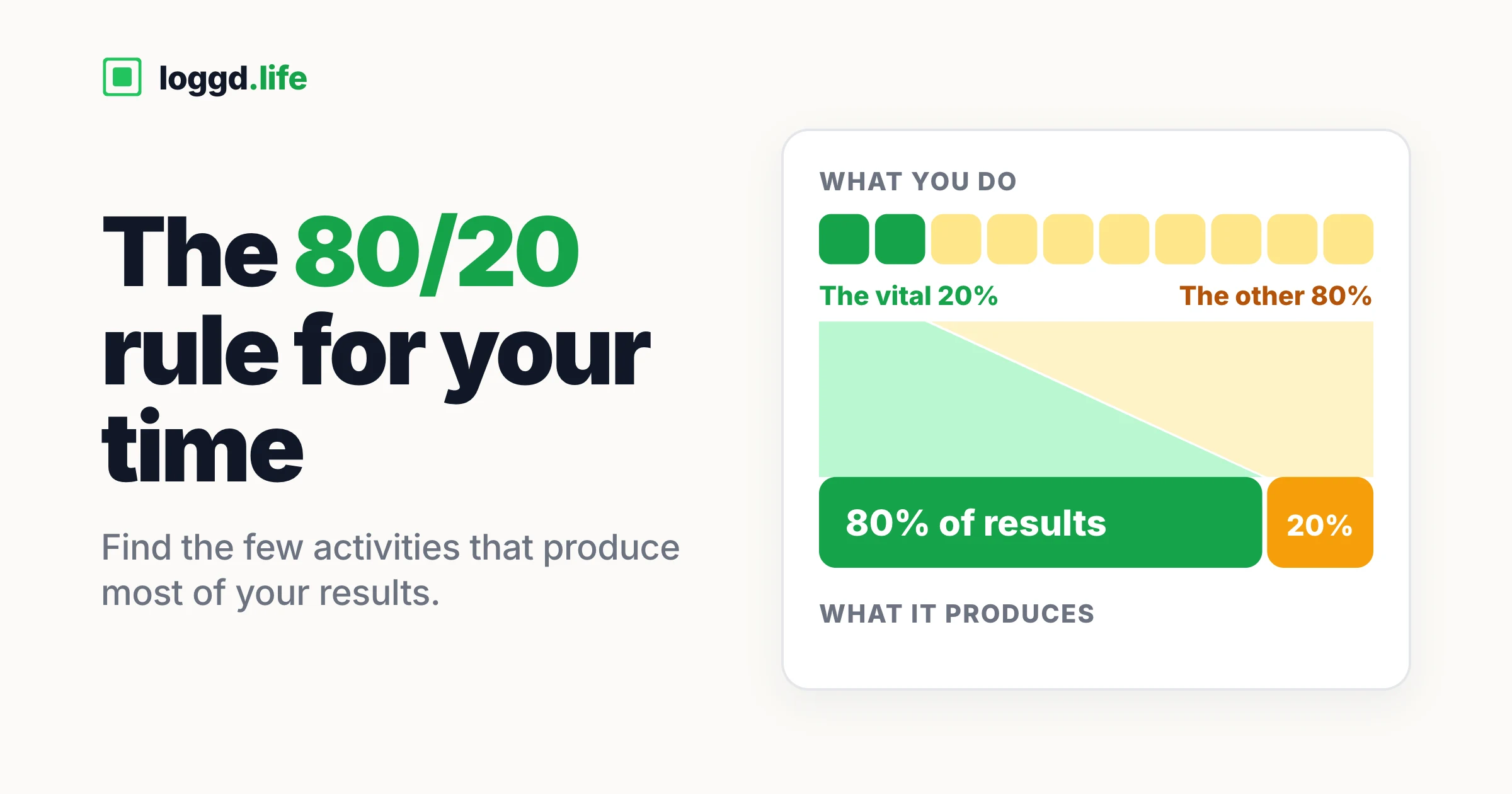
The 80/20 rule is a pattern, not a law. Here is how to find the few activities that actually produce your results, and what to do with everything else.
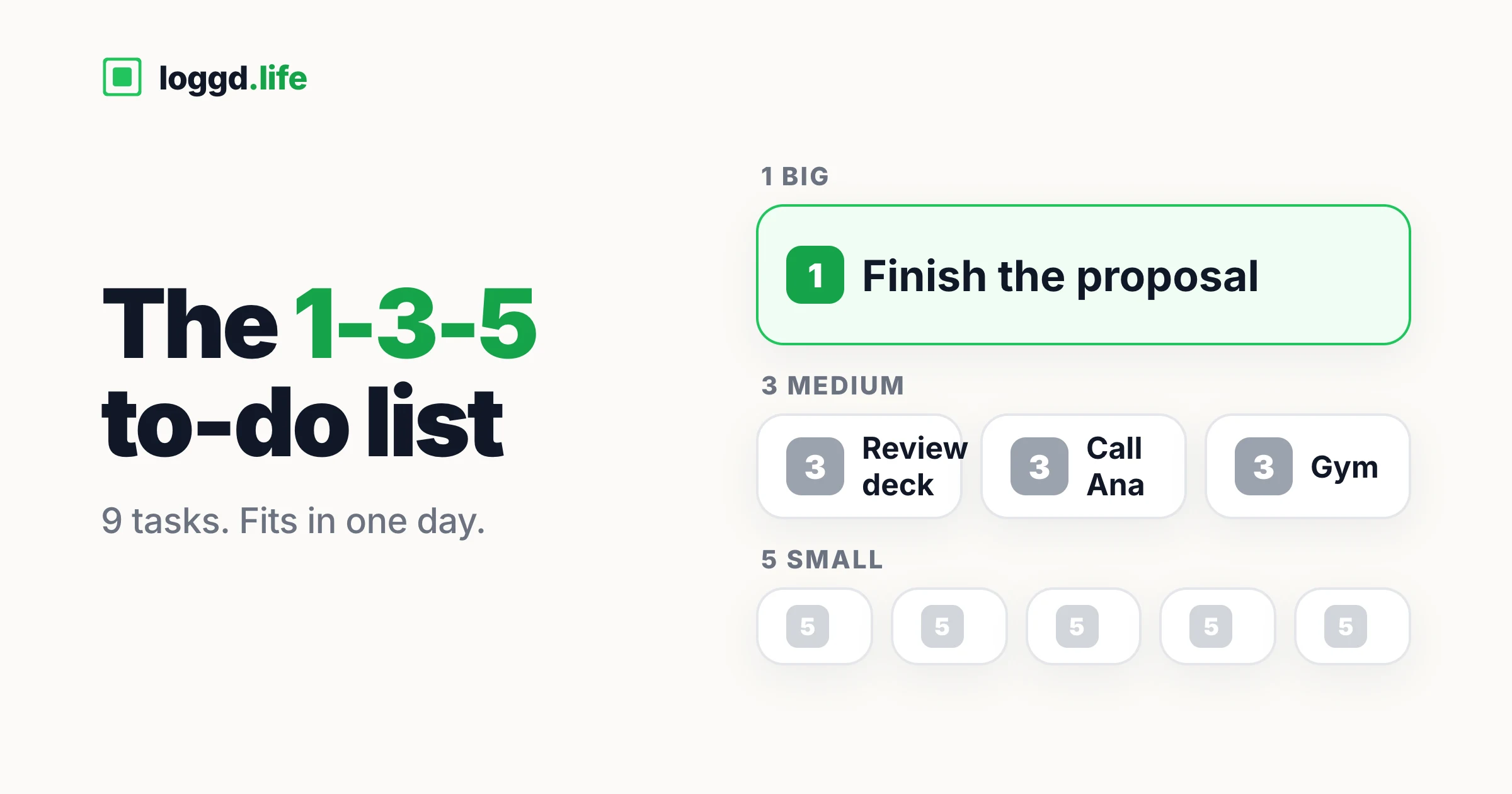
One big task, three medium, five small. Why capping the list at nine beats an open one, how to adapt it for reactive and meeting-heavy days, and what to do when the big task is really a project.
No posts match ""
Track habits, manage tasks, set goals, and level up with gamification. All in one free app.
Start Free